Search our site:
Balloon Object Lesson
Keepy-Uppy! - Encouraging Others

This balloon object lesson is a fun way to teach kids about encouraging others. I grew up playing this balloon game, and maybe you did too. Recently it has become known as "Keepy-Uppy" as seen on the show "Bluey."
It can be played by one or many and therefore fun to use with any ages. The primary goal is to keep the balloon up and not let it touch the ground. This can be played as individuals or as a team with as many balloons as you want to add.
My granddaughters ages 2-5 love to play this game, and I've seen youth groups go all out playing it too!
Balloon Object Lesson: Up, Up & Away!
Topic: Encouraging others
Primary Bible Verse: Hebrews 10:24-25
Key Takeaway: We can lift others up through encouragement.
Engage:

Play a game of Keepy-Uppy by trying to keep an inflated balloon in the air and not dropping to the ground.
Options:
* Play as individuals with each having their own balloon.
* Play with one person keeping one balloon up and then adding more balloons. Play again as a team all helping keep the many balloons up.
* Come up with your own rules; the possibilities are endless!
Photo credit @ Pexels.com
Explain:
Do you ever feel like you need a lift? Maybe you feel sad or discouraged—feeling like a balloon falling to the ground. Most everyone does from time to time, and that’s okay. But did you also know God can use you to lift someone else up when they feel this way? The Bible tells us we do this be encouraging others.
“Let us think of ways to motivate one another to acts of love and good works. And let us not neglect our meeting together, as some people do, but encourage one another, especially now that the days of His return is drawing near.”
Hebrews 10:24-25
Was it harder to keep the balloons in the air when doing it by yourself? When we worked together, we did a better job. In the same way, God wants us to work together encouraging each other and others.
Paul tells us in Philippians 2:1-4, “Is there any encouragement from belonging to Christ? Any comfort from His love? Any fellowship together in the Spirit? Are your hearts tender and compassionate? Then make me truly happy by agreeing wholeheartedly with each other; loving one another and working together with one mind and purpose.”
Let's think of some ways we can encourage others:
* We can use our words. Let's think of some ways we can encourage others with our words.
In Ephesians 4:29, Paul tells us our words can be gifts of grace to encourage others!
"Let no unwholesome word proceed from your mouth, but only such a word as is good for edification (building up) according to the need of the moment, so that it will give grace to those who hear."
We can encourage others with our words by giving sincere compliments and cheering them on. We can also use our words to encourage others by telling them about Jesus and how much God loves them. Our words can become like hands lifting up the balloons and keeping them from falling to the ground!
* We can also encourage others by being kind through our actions. Another verse in Ephesians says:
"Be kind to one another, tenderhearted, forgiving each other, just as God in Christ also has forgiven you." Ephesians 4:32
There may be someone who needs a friend to spend time with them, or they may need help in some way. Even a smile or a hug can go a long way in lifting someone up.
Let’s keep our eyes open to see those around us who may need a lift and then do a little “keepy-uppy” encouraging!
Encounter:
Dear Jesus, thank you for being the ultimate encourager! Please help me notice those around me who I can encourage too.
Explore:
To expand this balloon object lesson further, read the story of four friends who gave their friend a lift all the way to Jesus! It’s found in three of the four gospels: Matthew 9:1–8; Mark 2:1–12; Luke 5:17–26.
* If you are teaching preschool or younger, read from one of the gospels in an easy translation; then retell the story in your own words inviting kids to join in by sharing parts of the story they remember.
* If you are working with older children or youth, take time to read through all three gospel story tellings. Have them record additional information as these are read or break them into groups to be reporters recording what their section tells about the story and then share with the group as a whole. Make note that these three gospels are called the synoptic gospels because they tell similar stories from Jesus' life. By reading the story from each, we get a fuller account. Take time to discuss who the authors of the gospels are and their relationship to Jesus.

Photo credit: Vladimir Srajber @ Pexels.com
Encourage Action:
Be looking for those around you whom you can encourage. Imagine they are balloons you are gently lifting up. Prayer is another way we can encourage and lift others up to God!
© Copyright 2026 Susan Smart
More Bible Object Lessons:
Object lessons are all around us! We have almost 100 available free here on our website; you can find more in our Object Lesson Index A-Z.
|
Special note: We do preview the websites to which we link, but are unable to peruse them completely. We try to check others' faith statements and make sure they do profess Jesus Christ as God's Son and salvation is found only in Him. It must, however, be your responsibility to personally dig into God's Word and allow the Holy Spirit to be your first and final teacher on all subjects. "Our website may contain affiliate marketing links, which means we may get paid commission on sales of those products or services we write about. Our editorial content is not influenced by advertisers or affiliate partnerships. This disclosure is provided in accordance with the Federal Trade Commission’s 16 CFR § 255.5: Guides Concerning the Use of Endorsements and Testimonials in Advertising.” |
Creative Bible-Bits Newsletter:
Let us help you keep up with what's new at Creative Bible Study with free Bible study lessons and ideas straight to your email! Your information will be kept confidential and not be used for solicitation.
Free Ebooks:
 |
 |
 |
 |
Welcome to Creative Bible Study! Our About us page includes more info. including our belief statement. Thanks for visiting!
Also, see what's new for Creative Bible Study in print now with:
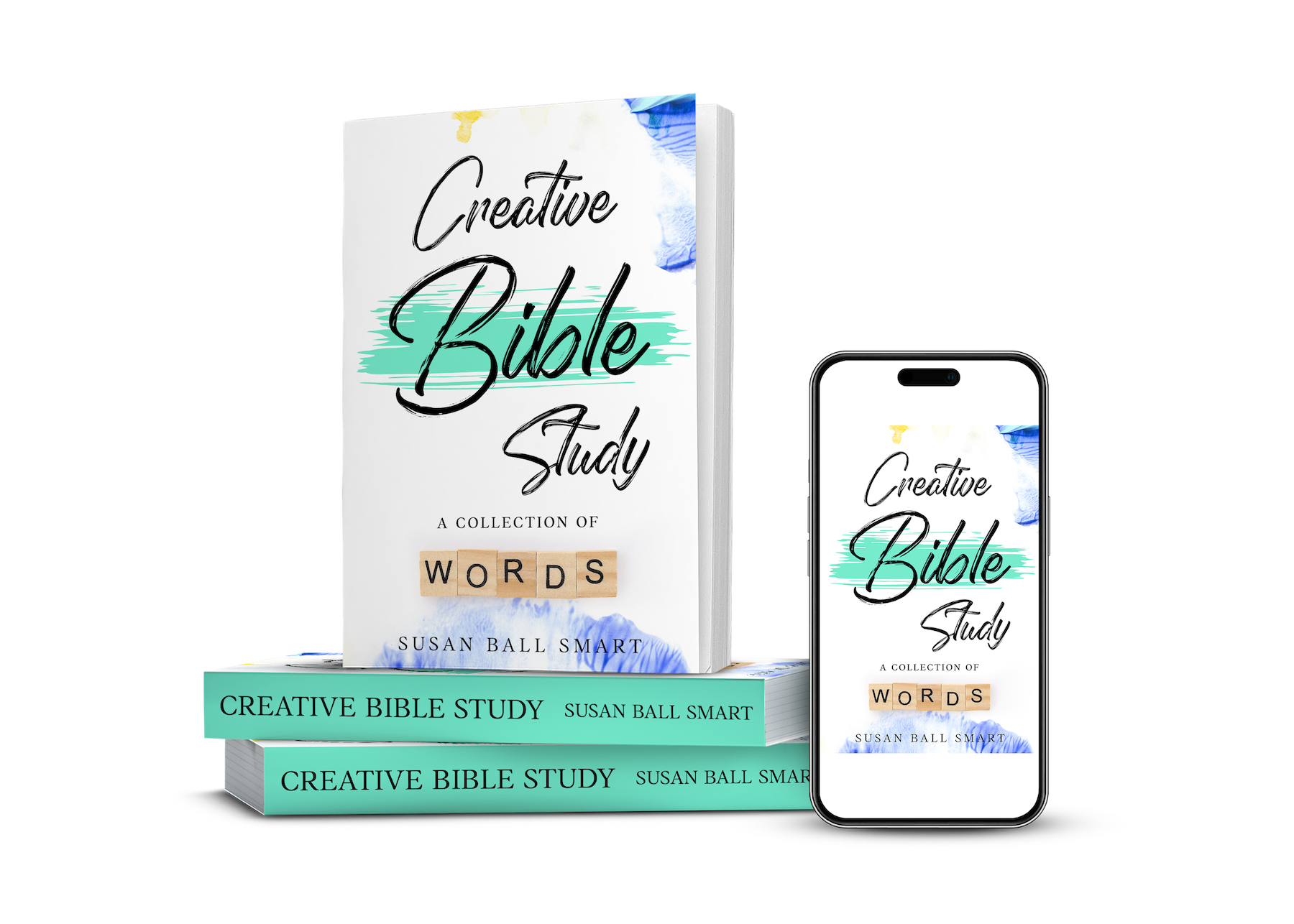
Creative Bible Study: A Collection of Words
Now available on
and Barnes & Noble
"Our website may contain affiliate marketing links, which means we may get paid commission on sales of those products or services we write about. Our editorial content is not influenced by advertisers or affiliate partnerships. This disclosure is provided in accordance with the Federal Trade Commission’s 16 CFR § 255.5: Guides Concerning the Use of Endorsements and Testimonials in Advertising.”
Recent Articles


-
Christian Object Lesson - Pumpkin Gospel
Oct 23, 26 11:00 AM
 Bring the light of Christ back to October & Halloween with this Christian object lesson, pumpkin prayer & Pumpkin Patch Parable script. Use a pumpkin to illustrate how through Christ we can get a new…
 -
Christian Halloween Alternatives - Shine for Jesus!
Oct 16, 26 10:48 AM
 October 31st is still a day that the LORD has made! These Christian Halloween alternatives create fun and glorify Jesus - the Pumpkin Gospel object lesson, free witnessing tracts & more! Let's shine H…
 -
Free Youth Bible Study Lessons
Oct 14, 26 10:09 AM
 Needing creative Bible study lessons for youth that are engaging...and free?! We have located some of the best youth Bible study lessons, activities, games & more!

Subscribe to our E-zine "Creative Bible Tidbits"
About Us Privacy Policy Contact Us


Unless otherwise noted all Scripture is New American Standard Bible Copyright © 1960, 1962, 1963, 1968, 1971, 1972, 1973, 1975, 1977, 1995 by The Lockman Foundation, La Habra, Calif. All rights reserved. For Permission to Quote Information visit http://www.lockman.org